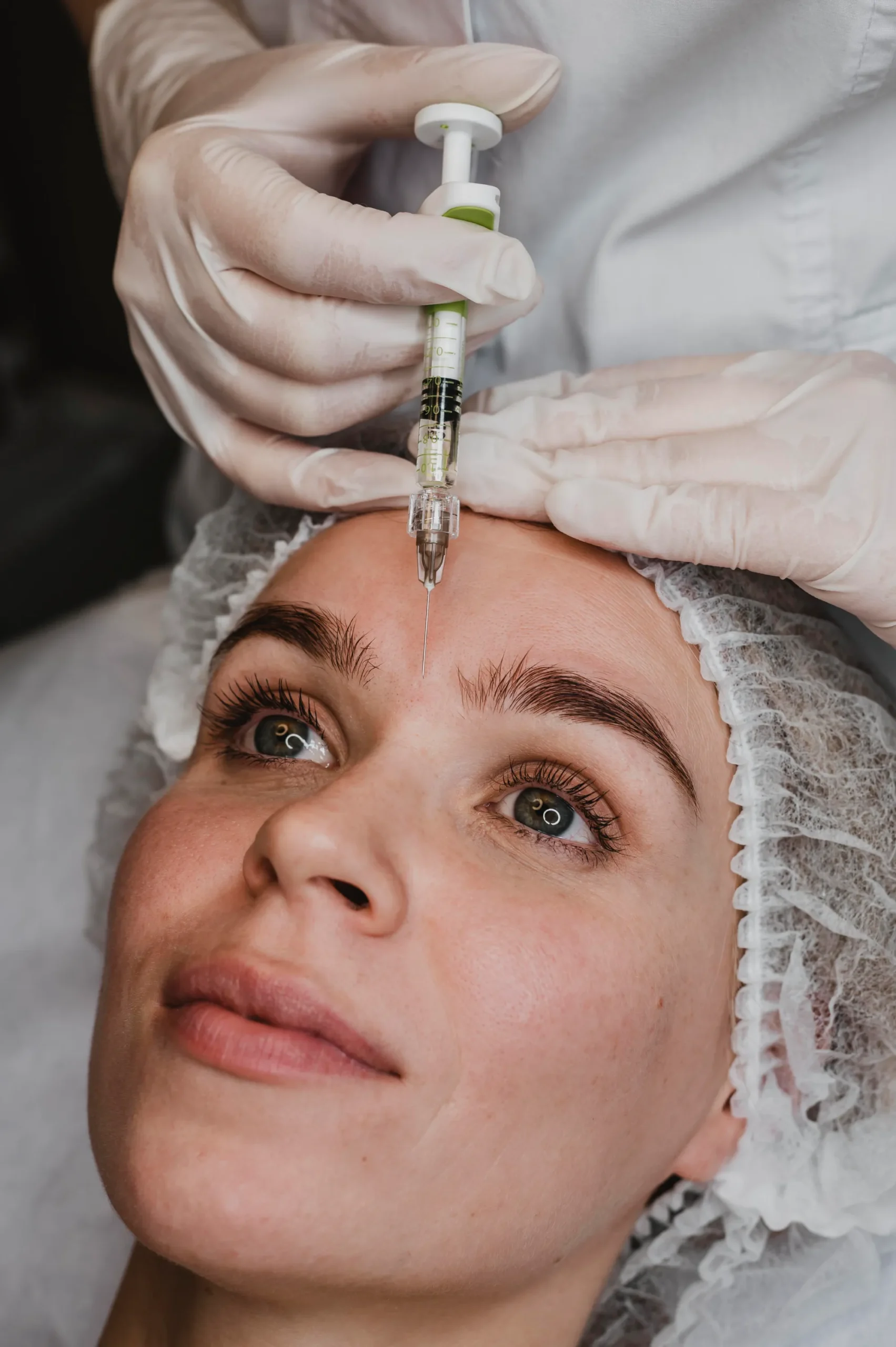
When you look in the mirror and notice a few new lines or a loss of “oomph” in your cheeks, your first thought is likely: “I need some Botox.” Or is it “I need filler?”
In the world of medical aesthetics, these two treatments are often mentioned in the same breath, but they work in entirely different ways. Understanding the difference between a neuromodulator (like Botox) and a dermal filler (like Juvéderm) is the first step toward achieving a refreshed, natural look.
Here is your guide to the most popular “tweakments” and what they can do for you.
The Wrinkle Relaxer: Botox® Cosmetic
Think of Botox as the “off switch” for the muscles that cause wrinkles.
- How it works: Botox is a neuromodulator. It temporarily blocks the signals from nerves to muscles. When the muscle can’t contract, the skin on top of it stays smooth.
- Best for “Dynamic” Wrinkles: These are the lines that appear when you make expressions.
- Forehead lines (when you look surprised).
- The “11s” (the vertical furrows between your brows).
- Crow’s feet (the crinkles around your eyes when you laugh).
- The Result: A smoother, more “rested” appearance. It doesn’t fill in deep cracks; it stops the folding of the skin.
- Longevity: Typically lasts 3 to 4 months.
The Volumizer: Juvéderm® & Restylane®
If Botox is the “off switch,” Dermal Fillers are the “plump-up” tool. Most modern fillers are made of Hyaluronic Acid (HA), a sugar naturally found in your skin that holds a thousand times its weight in water.
- How it works: Fillers are a gel-like substance injected beneath the skin to literally “fill” an area. They replace the fat and collagen we lose as we get older.
- Best for “Static” Wrinkles and Volume Loss: These are the lines present even when your face is at rest.
- Lips: Adding volume and defining the border.
- Cheeks: Lifting sagging skin and restoring “high” cheekbones.
- Nasolabial Folds: Smoothing the deep lines between your nose and mouth.
- Under-Eyes: Eliminating the “hollow” look that creates dark circles.
- The Result: Restored contours and a dewy, youthful fullness.
- Longevity: Depending on the area, results last 6 months to 2 years.
Which One Do I Need?
The easiest way to remember the difference is the “Motion vs. Rest” test:
- Do your wrinkles appear mostly when you’re moving your face? You likely need Botox.
- Do you see lines or “hollows” when your face is completely still? You likely need Filler.
The “Liquid Facelift”: The Power of Both
Most patients actually achieve their best results by using a combination of both treatments.
By using Botox to relax the upper face (forehead and eyes) and Juvéderm to lift and fill the lower face (cheeks and lips), you address aging from two different angles. This provides a comprehensive rejuvenation that looks much more natural than trying to fix everything with just one product.
Safety First: The Expert’s Touch
The most important ingredient in any cosmetic treatment isn’t the product in the syringe—it’s the hand holding it. Nerves, muscles, and blood vessels create a complex map under your skin. Choosing a board-certified professional like Dr. Rodney Green ensures that your injections are placed with surgical precision, minimizing the risk of bruising and ensuring your results are symmetrical and subtle.
Ready to find your perfect match?
The best way to know which treatment is right for your unique facial structure is through a personalized consultation. We can map out a plan that fits your goals and your budget.